
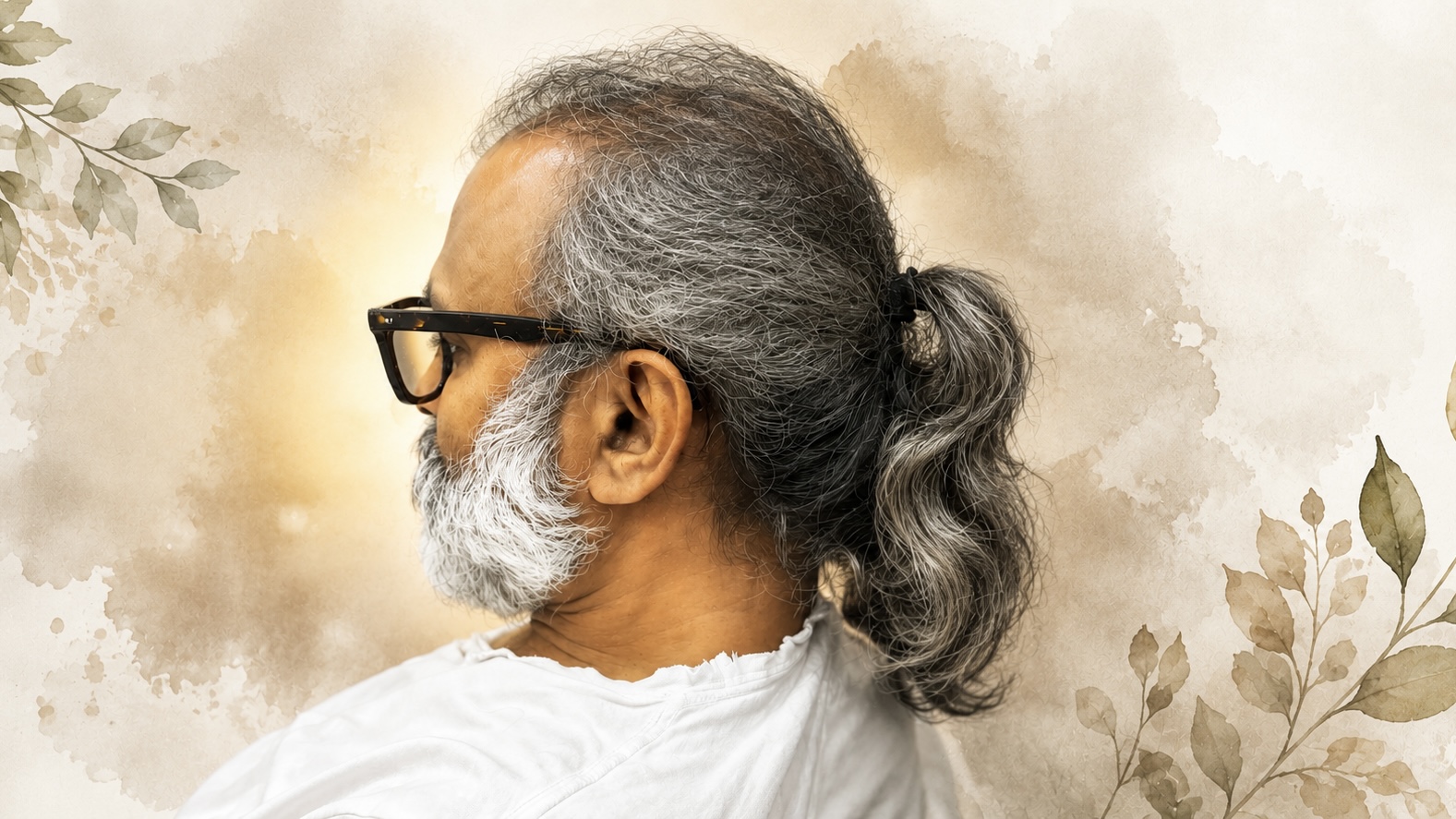
What Does It Mean for the Mind to Grow Older?
4 months ago By Yogi AnoopWhat Does It Mean for the Mind to Grow Older?
We often accept that the body must age—but rarely do we question whether the mind is aging in harmony with it. True balance lies in this alignment. If the body advances in years while the mind remains shallow, reactive, or restless, it signals a deeper imbalance.
The “age” of the mind is not measured in years, but in depth of experience. It reflects how long, how fully, and how consciously one can remain with an experience—whether it belongs to the outer world or the inner one.
A child, for instance, lives in fleeting impressions. Attention shifts quickly, not out of fault, but because the capacity to stay with an experience is still limited. As one matures, this capacity should naturally expand. Life is not merely to be lived quickly, but to be absorbed deeply.
Take something as simple as eating. A child may rush through a meal, barely noticing taste or texture. A mature mind, however, lingers—sensing flavor, appreciating the process, and remaining present. This ability to dwell in an experience without haste is a sign of inner maturity.
But this depth is not confined to sensory life. It gradually opens the door to the inner world. Those who develop a refined capacity for experience often find themselves drawn toward introspection and, eventually, spirituality. History offers many such transformations—like that of Valmiki, whose life shifted through profound inner awakening.
On the other hand, when this capacity remains underdeveloped, the mind stays immature—regardless of age. Such a person struggles to regulate the senses, cannot truly relax the body or mind, and often lives in subtle tension. Over time, this imbalance may manifest not only mentally, but physically and even existentially.
Interestingly, some people attempt to secure health through excessive control—strict routines, constant precautions, and a persistent fear of illness. Outwardly, they may appear disciplined or even healthy. Yet inwardly, there is fatigue, dissatisfaction, and emotional dryness. In such cases, the absence of disease does not equate to true well-being.
To grow the mind, then, is to cultivate patience, depth, and the ability to experience fully. Some rare individuals achieve remarkable maturity early in life—figures like Adi Shankaracharya are often cited as examples. While such precocity is exceptional, the principle remains universal: the mind must evolve alongside the body.
Today, however, we often witness the opposite. With age, many minds become more rigid, irritable, and unstable. This is why old age is sometimes associated with bitterness or mental decline—not because aging demands it, but because inner growth was neglected.
Ultimately, the quality of life is not determined by how long we live, but by how deeply we are able to experience life. A mature mind brings stillness, clarity, and richness to every moment.
So the real question is not: How old are you?
But rather: How deeply have you learned to live?
Recent Blog
Copyright - by Yogi Anoop Academy